


Click on the picture to see a larger version.
Exterior view of "Little Venice", the Warwick Avenue shelter operated by Pat Carter. The kitchen is to the left of the entrance. Shelters can operate under their own restaurant names (like "Little Venice" or "The Bell and Horns") but regulations governing historic buildings forbid commercial signage.
Source: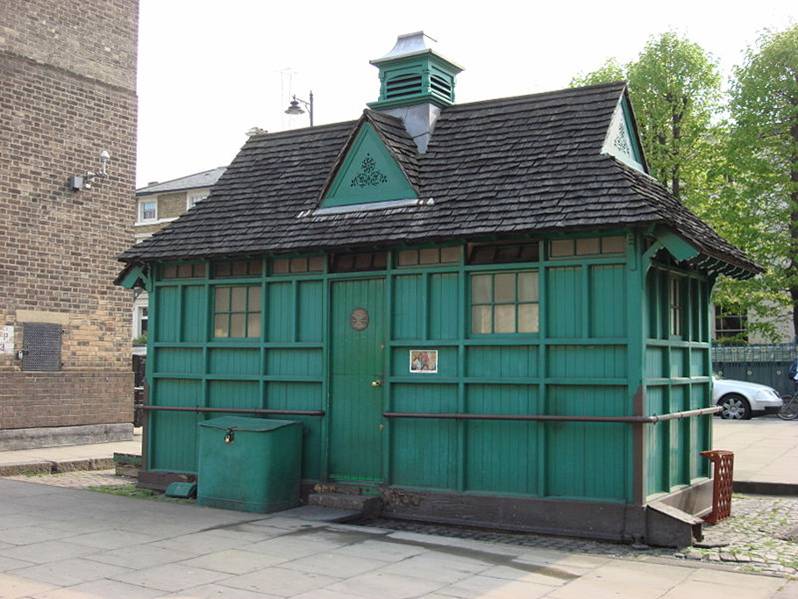
A Cabmen's Shelter Fund shelter in Warwick Avenue W9 - centre of the road, by Warwick Avenue tube station. Photograph by oxyman, 3 October 2007.
Wikipedia: Taxicabs of the United Kingdom: Cabmen's Shelter Fund. Click here to view source.

Bloomsday for Cab Drivers / 30
The Cabmen's Shelter / 8
Many of the London shelters were bombed out of existence during World War II and some fell victim to street widening projects after the war, but it was probably the passing of the horse cab that put most of the shelters out of business.
The automobile and radio dispatching gave drivers much greater mobility, allowing them to stop almost anywhere for meal breaks. The cabmen's shelters depended heavily (though not exclusively) on the patronage of cab drivers, and this diminished as the drivers became less dependent on cab stands for their fares.
The same is true of Joyce's shelter at Butt Bridge. The shelter itself is long gone but a statue of James Connolly, a hero of the Easter, 1916 uprising, marks the approximate spot for modern Bloomsday pilgrims.