• Driver Profiles
Larry Botrie Toronto, Ontario / October 26, 1968 Larry Botrie, a 26-year-old immigrant from Lebanon, drove for Metro Cab. He lived lived with one of his two brothers, both of whom were also Toronto taxi drivers, and planned to return to Lebanon the following month to marry and bring his bride back to Canada.
Mr. Botrie was nicknamed "The Arab" by other Metro Cab drivers. "In my books he was a damn good guy," said one of them. "He was always kibitzing around. Just before he picked up a fare he stuck a $2 bill in my windshield and said: 'There's a ticket for you.' I turned on the wipers and he grabbed it back in a hurry."
On Friday, October 26, 1968 two Toronto boys aged 14 and 15 decided to run away from home, or rather from their parents. They hooked up with a 23-year-old man and a plan emerged to rob a taxi driver, "tie him to a tree somewhere," steal the cab and drive to Midland, Ontario. At first the 15-year-old was supposed to hold up the driver at knife point but the 23-year-old later decided to bring along a .30-30 calibre rifle belonging to the 15-year-old's older brother. The rifle was wrapped in cloth.
The trio hailed Mr. Botrie's taxi about 5 p.m. He was immediately suspicious of his passengers and asked for his fare in advance. When told they had no money, he drove into a service station lot near Highway 401 and Yonge Street and threatened to call the police.
At this point the 15-year-old pulled out the knife and held it to Mr. Botrie's chest, at the same time calling for the others to "get the gun." Mr. Botrie was able to seize the knife and a service station attendant saw him grab the barrel of the rifle which was held by the 23-year-old. As Mr. Botrie struggled for possession of the gun he shouted for the attendant to call the police.
Then the gun went off and Mr. Botrie fell to the ground. As he tried to crawl from the cab the 23-year-old shot him twice in the back.
The killer then got into the driver's seat and drove the taxi across four lanes of traffic, a median strip and a ditch before trying to drive up the off-ramp from Highway 401. Here the car stalled and rolled back into the ditch and the trio sat in it for almost five minutes. Meanwhile a passing ambulance picked up Mr. Botrie and rushed him to hospital where he was pronounced dead.
The killer and the two juveniles eventually left the cab, walked eastward along Highway 401 and then cut through back yards as witnesses called police with a steady stream of tips. A patrol sergeant confronted the killer behind a Sheppard Avenue home and shot him dead when he raised his rifle.
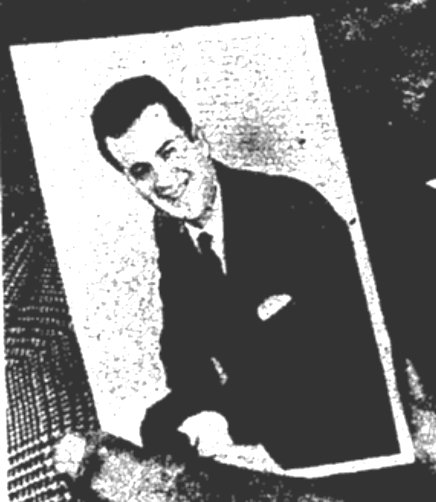
A fellow driver holds a picture of Larry Botrie. (Source: Toronto Star, April 27, 1968, p. 1)
The two juveniles were found hiding in a tool shed. They later pleaded guilty in Juvenile and Family Court to conspiring to commit robbery.
Mr. Botrie's death coincided with a campaign by Osgoode Hall law professor Allen Linden to broaden Ontario's Law Enforcement Compensation Act. Professor Linden surveyed 167 victims of robbery and violent crimes committed in 1966 and found that only three of them had been able to collect any kind of damages.
In 1968 the Act covered only people who suffered loss while assisting the police and the Botrie family's initial claim was rejected on the grounds that Mr. Botrie was already dead when police arrived on the scene.
In June, 1969 the Act was amended to allow awards of up to $10,000 for all innocent persons injured by criminals. In September the Ontario Law Enforcement Compensation Board ruled that Mr. Botrie's mother and brother were entitled to compensation, the amount to be decided later.
Mr. Botrie's body was returned for burial to Lebanon where his mother still lived.