• Driver Profiles
Gerald Stephen DeViller St. Thomas, Ontario / February 9, 1968 Sometime between 10:15 and 10:30 p.m. on the night of Friday, February 21, 1968, a man phoned Cox Cabs in St. Thomas and asked for a taxi to take him to Port Stanley on Lake Erie, about 15 km (10 miles) south. The call came from a business on Talbot Street, a few blocks from the Cox Cabs office at Talbot and Moore. Gerald DeViller was dispatched to pick up the caller. There turned out to be two fares, young men aged 21 and 22.
At about 11:10 p.m. a couple named VanVelzer was driving east on Lake Road near Port Stanley when Mrs. VanVelzer spotted what she thought was the body of a man lying beside the road. This proved to be Gerald DeViller.
Without getting out of their car, the couple backed up the driveway to a nearby farmhouse owned by Floyd Aukland and phoned the Ontario Provincial Police. They then drove back to the body and waited for the police to arrive.
Mr. DeViller was lying face down on the south side of the road, partly on the gravel shoulder and partly on the grass with his head to the west. There was a lot of blood around him. He had been stabbed and bludgeoned and run over by his own car.
The OPP notified the St. Thomas city police of the murder. Only a couple of minutes after receiving this call the city police learned of the discovery of Mr. DeViller's abandoned taxi. A Cox Cabs driver found it parked on Leila Street and notified the taxi dispatcher who relayed the news to the police. There was no evidence of foul play in the car, suggesting that Mr. DeViller was outside it when he was attacked.
Mr. DeViller, 48, and his wife Marie had moved back to St. Thomas from Hagersville five months earlier after Mr. DeViller retired from the Royal Canadian Air force. Originally from Nova Scotia, Mr. DeViller was a supply technician at No. 14 Service Training Flying School in Aylmer during World War Two. He re-enlisted in the RCAF in 1951 and served as a supply technician at Centralia, Camp Borden and Trenton.
While in Aylmer during the war Mr. DeViller spent his leave weekends and off-duty hours working as a spare driver for Cox Cabs. On his return to St. Thomas he started driving for the company full time. The company owner, Cecil Cox, called Mr. DeViller "a good chap and the last person you would expect to get into a thing like this."
The DeVillers had three children. A 22-year-old son remained in Hagersville where he worked while an 18-year-old son was employed with the RCAF at the Clinton Air Station. A ten-year-old daughter lived at home.
Marie DeViller learned about her husband's death at about 3 a.m. on Saturday morning when Cecil Cox and Rev. F.J. Shilliday came to the house to break the news.
Both suspects were quickly arrested and in May, 1968 both were convicted of murder with no possibility of parole for 20 years. The two murderers continued to make news over the next 40 years.
In April, 1971, prisoners at Kingston Penitentiary staged a four-day revolt in protest over a number grievances that were later conceded to be largely justified. They took six guards hostage and to ensure the guards' safety prison authorities allowed the prisoners to take over the cell block areas. While the leaders of the revolt were negotiating with a citizen's committee in the prison hospital, a rival faction invaded a cell block where "undesirable" prisoners -- sex offenders and informants -- were kept locked up for their own safety by the rebels. The rival faction dragged these prisoners to the penitentiary's central "dome", tied them to chairs and systematically bludgeoned them. Two of the victims died of their injuries.
As news of the beatings became known the army was sent in to restore order. The prison was heavily damaged over the four days but the six guards were set free unharmed.
Thirteen prisoners were charged with murdering the two dead victims. One of the thirteen was Mr. DeViller's 21 year old killer (now 24) who was described as wearing black gloves and smiling as he beat helpless victims with a rod. He was convicted of manslaughter and sentenced to a further ten years.
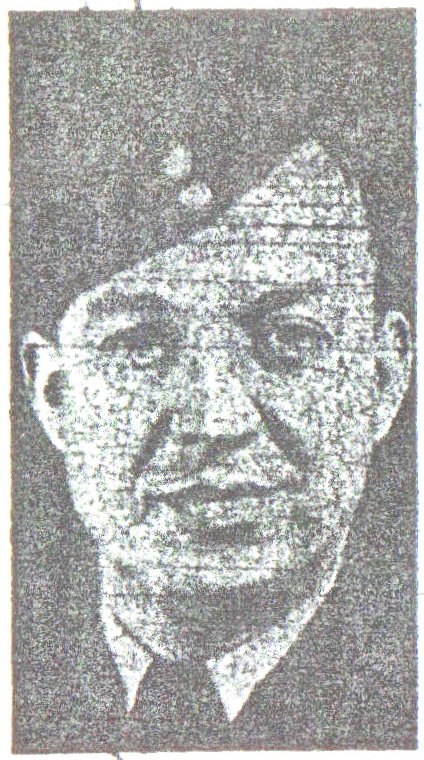
[Next column] Gerald DeViller. (Source: St. Thomas Times-Herald, February 10, 1968, p. 1.)
In 1973 Mr. DeViller's older murderer -- the 22-year-old, now 27 -- escaped from the medium-security Collins Bay Penitentiary with three other prisoners. The four men crawled through ventilation ducts to a service building, triggered a maintenance alarm and surprised the engineer who showed up in response. They used the engineer's keys and car to escape.
One of the four, who was exposed in the media as a sex offender after the escape, was found dead in a ditch about ten miles south of Windsor. He had been shot several times and was wrapped in blood-soaked blanket. One of the other escapees (not Mr. DeViller's murderer) was later convicted of shooting him. Police captured all three remaining escapees at two homes in Windsor but not before the murderer shot a Windsor police officer in the leg. He escaped from prison again in 1979 but was soon recaptured.
Both murderers were subsequently transferred to Drumheller prison in Alberta. In 1984 they and a third man were charged with beating a fellow prisoner to death with a baseball bat. The third man was convicted of the murder and Mr. DeViller's younger murderer was again convicted of manslaughter. The older murderer was acquitted but while at Drumheller he made two abortive escape attempts.
In 1992 the older murderer -- now 46 -- was transferred to Bowden prison, 40 kilometres south of Red Deer and in October was granted day parole from Hope Mission in downtown Edmonton. In January, 1993 he failed to return to the mission and was still at large more than a month later when news of his escape was finally made public. He was recaptured in Lethbridge in April.
Despite questions raised about why he was allowed out on day parole with his record of violence and attempted escapes the older murderer was eventually granted full parole. He married and settled in Lethbridge.
In June of 2008, now 62 years old, he fell into a rain-swollen creek while on a camping trip and was swept away by the current. His body was found 150 yards downstream.
Marie DeViller died in 2004 at the age of 82.