• Driver Profiles
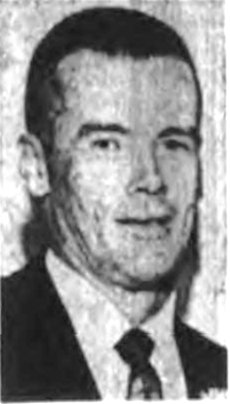
Gerald King Mulholland Victoria, British Columbia / November 10, 1970 Gerald King Mulholland, 37, was born in Winnipeg and joined the Royal Canadian Navy when he was 19. He served on the minesweeper HMCS Miramichi after which he was stationed ashore at Canadian Forces Base Esquimalt.
Mr. Mulholland settled in Victoria in 1954. He was married and had seven young children, four sons and three daughters, all living at home.
Mr. Mulholland was well known in local soccer and softball circles. He was goaltender for the Gorge Molsons of the Victoria and District Soccer League.
In order to augment his corporal's salary he drove part-time for Victoria's Owl Taxi. Company owner Doug Marson described him as a hard-working man and a good driver. He said Mr. Mulholland would call him from CFB Esquimalt every day after work and ask if there were any driving jobs open in the evening.
On the evening of Tuesday, November 10, 1970 Mr. Mulholland decided to skip a soccer practice in favour of a taxi shift. Other drivers saw him parked outside the Churchill Hotel on Government Street at about 7 o'clock.
Meanwhile, inside the Churchill beer parlour, three young men were plotting mayhem. Two of them, aged 18 and 20, were Navy men, but of a very different stamp from Mr Mulholland.
Both had spent the previous summer "engaged in heavy, continual use of marijuana, LSD, hashish, MDA, STP and mescaline" and on this particular evening both were absent without leave as well as being drunk and high on drugs.
The third member of the trio was another 20-year-old drug user who was desperate for money to buy heroin. It was not long before they came up with the idea of robbing a cab driver. Another youth at a neighbouring table obligingly loaned them a knife "for protection" and they set off to find a victim.
They were about two blocks from the Churchill, at the corner of Yates Street and Douglas Avenue, when they spotted Mr. Mulholland and hailed him. They told him to drive to Battery Street, 15 blocks south.
In the 600 block of Battery they ordered Mr. Mulholland to turn over his money. He surrendered his wallet but then tried to flee from the cab. Two of the men pulled him back and in the struggle the knife "unfortunately entered his neck" and severed the right vertebral artery. It was a fatal wound and Mr. Mulholland quickly succumbed to internal bleeding.
The three men "panicked" and ran off, but retained sufficient presence of mind to steal Mr. Mulholland's cash ($26), divide the proceeds and toss his wallet into a dumpster behind an apartment building two blocks away. The wallet was discovered by the building's caretaker.
At about 7:40 p.m. two women were walking west along Battery Street when they noticed Mr. Mulholland's taxi parked with its front end angled into the traffic lane. The driver was slumped over the wheel.
The women walked on by but were uneasy about what they had seen. After some discussion they returned to the cab and rapped on the driver's window. Hearing a groan from inside they ran to call the police but it was already too late. Mr. Mulholland was dead on arrival at St. Joseph's Hospital.
Investigators were initailly left with few clues to go on. This being the case, on November 13 the Victoria police commission announced a $2,000 reward for information leading to the conviction of Mr. Mulholland's killers. Joseph Nordal, the president of C&C Taxi, added another $300.
Two days after the reward was announced the three suspects were in custody. Inspector William Andrews of the Victoria Police was coy about whether or not the reward played a role in the arrests, nor did he divulge details of the investigation.
He merely stated that "In my 29 and a half years in the department, I don't think I have ever seen an investigation worked on so hard by so many members with so much esprit de corps in the whole force." He said the Victoria Police were "supported in their initial investigation by the whole-hearted cooperation of CFB Esquimalt base security, RCMP and other police departments."
Mr. Mulholland's funeral was held on November 18. About 300 mourners attended and the mile-long funeral procession included 42 cabs, almost half of Victoria's taxi fleet.
The preliminary hearing began on December 23 with the Crown's case being presented by J. W. Anderson. The second day of the hearing took place on Monday, December 28, after the Christmas break. However on that same Monday prosecutor Anderson's wife was rushed to hospital with a cerebral hemhorrage and died soon afterward.
Mr. Anderson was therefore excused and John McIntyre of the Provincial Court's family division was called in to take over the prosecution. Mr. McIntyre was given a day to familiarize himself with the case.
[Next column] Gerald King Mulholland. (Source: Victoria Daily Colonist, November 13, 1970, p. 1 via University of Victoria: The British Colonist)
The fifth day of the hearing opened with a surprise announcment from Judge William Ostler. The prosecution had withdrawn the joint non-capital murder charges originally brought agaist all three defendants.
Instead, the two sailors were now charged with manslaughter and the third man's charge was reduced to robbery with violence. The third man also faced prior charges of trafficking in marijuana and LSD.
The surprise announcement left questions as to how the prosecution would have been conducted if J. W. Anderson was in charge.
The plea deal also solved a knotty calendar problem for the court. If the Mulholland trials had gone ahead, other trials would have had to be rescheduled.
Everyone seemed to be happy with the arrangement and the preliminary hearing wound up cheerfully. As he left the courtroom Judge Ostler said "I hope all counsel who have worked so hard in the last few days and are now going to have a lengthy weekend will have a good one and a Happy New Year."
"The lawyers rose in a body to reply: 'The same to you, your honor.'"
All three of the accused pleaded guilty. The two sailors were sentenced to ten years and the third man to a total of four years for his robbery and drug charges.
In October, 1974 the younger of the two sailors (the one who had actually stabbed Mr. Mulholland) was released on day parole but failed to return. He managed to stay at large for nearly eight years until September, 1982. In consequence his jail term was extended to April, 1985.
The killer immediately appealed on the grounds that since over ten years had elapsed since his manslaughter conviction, his sentence had expired and he deserved to be released.
The appeal hinged on a technicality. When the killer violated parole, his parole was "terminated" rather than "revoked" as required by the Criminal Code.
In December, 1982, the British Columbia Supreme Court ruled that because the killer had pleaded guilty to being unlawfully at large, it didn't matter whether his parole had been "terminated" or "revoked."
The court dismissed his appeal, declaring it "premature."