• Driver Profiles
Paramjit Singh Winnipeg, Manitoba / September 27, 1989 Paramjit Singh was last heard from at about 7:30 p.m. on Thursday, Sept. 27, 1989. He had been dispatched to pick up a fare at Corydon Avenue and Arbuthnot Street, but he radioed the dispatcher that nobody was there. The 28-year-old father of two then called his wife and told her that he had a fare going downtown and that he would be home for lunch at 9:45 p.m. He never arrived.
Mr. Singh's taxi was found Thursday night about 11:20 p.m. behind a marketing office at 250 Panet Road. There were blood stains on exterior of the cab on the driver's side. About 30 police officers and a helicopter were detailed to look for him.
On Friday afternoon two 13-year-old boys riding home in a school bus spotted something in the ditch along Sapton Road, east of Bird's Hill Provincial Park. Sapton Road was a busy thoroughfare but the bottom of the ditch was too deep to be visible from a car.
At about 3 p.m. on Sunday afternoon the boys decided to investigate what they had seen and discovered Mr. Singh's body face down in the ditch. His trousers and underwear were pulled down to his ankles. He had been shot in the chest with a shotgun.
Mr. Singh's murder -- the third taxi driver murder in a little over three years -- sparked new demands for safety measures. Manitoba Legislative Assembly member Gulzar Cheema also linked the issue of cab safety to racism, noting that East Indian drivers had complained to him about the racial abuse they encountered.
"The East Indian community finds it hard to separate the issues of cabbie safety and race relations because about 60 percent of them work in the industry," Cheema said.
On October 3 the Manitoba government announced it would set up a committee to review taxicab safety. Cheema said that instead the government should simply implement the recommendations that arose from the report that was commissioned after Gurnam Singh Dhaliwal's death in 1986. The report had called for mandatory protective shields.
In 1986 the New Democratic government acted on the recommendation but then backed down in the face of objections from cab owners. The province's Advisory Committee Workplace Safety and Health claimed to have dropped the idea when it was found that no existing shield designs would guarantee passenger safety. However a local window company owner said he installed shields in 276 taxis during the two weeks that they were mandatory.
Also on October 3, police arrested a 22-year-old man in a Galt Street hostel and charged him with Mr. Singh's murder.
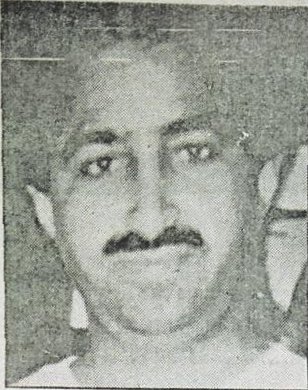
Paramjit Singh. (Source: Winnipeg Sun, October 1, 1989, p. 4)
On October 10 the case took a new twist when it was learned that Mr. Singh had activated an emergency distress signal but the dispatcher did not notify police. A police investigation later found no evidence of criminal negligence.
Mr. Singh's funeral on October 10 was attended by about 300 people, half of them taxi drivers. About 100 cabs, flying black ribbons from their radio aerials, joined the funeral procession.
At the same time, highways minister Albert Driedger announced that the government would be making the installation of shields mandatory. Ironically the Driedger's Conservative party had opposed mandatory shields when the NDP government introduced the measure in 1986.
However, it took the death of another Winnipeg cab driver, Pritam Deol before the mandatory shield policy was finally implemented.