• Driver Profiles
Fernand Talbot Montréal, Québec / August 1, 1993 Fernand Talbot was a 58-year-old independent cab driver who was licensed to operate in Montreal's A-11 taxi "agglomeration" or zone. His taxi was not equipped with a radio so he relied on picking up fares from taxi stands or from street hails.
Shortly after 5 p.m. on Sunday evening, August 1, 1993, Mr. Talbot picked up two young men. He had no inkling that the pair, a ruthless 29-year-old killer and his 30-year-old accomplice, had already marked him for death.
The 29-year-old had a long criminal record dating back to when he was a teenager. In 1986, while serving a three-year sentence for armed robbery in Kingston, Ontario's Joyceville Penitentiary, he stabbed another inmate to death. He was sentenced to nine years for manslaughter but was granted mandatory parole on December 31, 1992, after serving two-thirds of this sentence.
In April of 1993 he breached his parole and was jailed for a month. On June 9 he left Kingston for Toronto, violating parole once again. He took refuge in Toronto's gay community hoping that the historically bad relations between the community and the police would help him to escape notice.
It was here that the killer met his 30-year-old accomplice, a gay travel agent who believed that he was dying of AIDS. The two, regarding themselves as outcasts, formed what the killer called a "brotherhood of doom."
The pair shared the accomplice's apartment on Charles Street East and were joined by third man, a 61 year old retired dentist who had been evicted from his own apartment for allowing homeless men to stay there.
On July 27, 1993, needing money for drugs, the killer and his accomplice robbed a Canada Trust branch and escaped with $550. On July 30, needing more drug money, they robbed the same branch and got away with $2500.
When they returned to the apartment the retired dentist told them of a rumour he had heard that the police were looking for the pair in connection with two bank robberies. Convinced that he was going to report them to the police, they lured him to the basement of an adjoining building where the killer bludgeoned and stabbed him to death.
Soon after the murder the pair took a train from Toronto to Montreal. According to the killer, the accomplice was so thrilled by witnessing the violent death of the dentist that he wanted to carry out a similar murder himself before he died. The pair then hatched a plan to murder and rob a taxi driver.
According to the plan the accomplice was to sit behind the driver while the killer, sitting in the front seat, looked for a quiet location to have the taxi pull over. When the taxi stopped the accomplice was to attack the driver with a knife.
The plan was disrupted when Mr. Talbot objected to the killer sitting in the front seat. The killer pretended not to understand and got in front anyway. Mr. Talbot was visibly irritated but did not pursue the matter.
When the taxi pulled over in a warehouse parking lot in the Saint-Laurent industrial park, the accomplice poked at Mr. Talbot's neck with the knife but so feebly that he barely broke the skin. Mr. Talbot tried to open his door and escape, but the killer grabbed the knife from the accomplice and stabbed Mr. Talbot in the chest, inflicting a fatal wound.
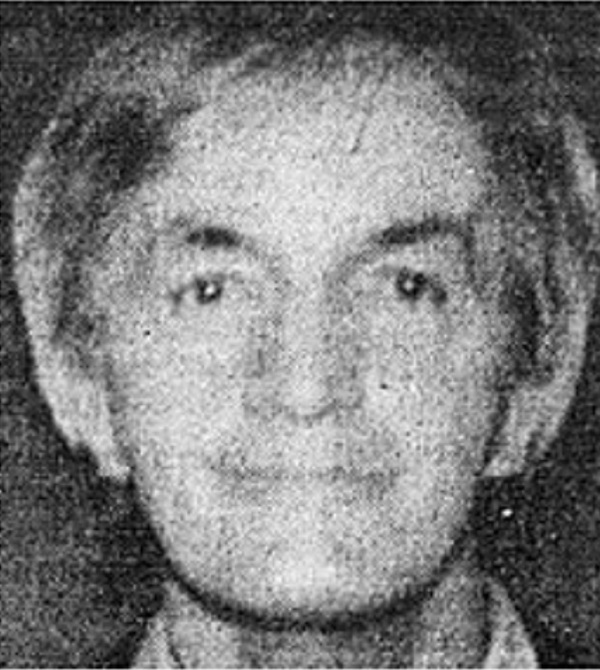
Fernand Talbot. (Source: La Presse, August 6, 1993, p. A3, via BANQ.)
The killer stabbed Mr. Talbot eight more times after which the victim was robbed of $400 and pushed out of the taxi. The pair drove to the corner of St. Louis and Gratton Streets, about ten kilometers away, and abandoned the taxi behind a shopping mall. They then stole aother car and drove to Ottawa.
Along the way they stopped at a gas station and used the washroom to clean Mr. Talbot's blood off the stolen money. This took them so long that the gas station attendant complained. Later the pair used Mr. Talbot's American Express card to purchase alcohol and food, including lobster, escargot and shrimp salad.
Mr. Talbot's body was discovered minutes after the murder but the taxi was not found until Monday morning when a passerby noticed the blood stains inside the car and called police.
On August 4, three days after Mr. Talbot's murder, the killer strangled and stabbed his accomplice to death, supposedly at the victim's own request. Shortly afterward he turned himself in to police, saying that he was tired of killing people.
On February 16, 1994, while in jail awaiting trial for the Canada Trust robberies, the killer stabbed a fellow inmate and threatened to kill him before a guard managed to separate the two. On March 7 he was sentenced to eight years for the robberies and the stabbing.
On June 27 he was sentenced to life imprisonment for the second-degree murder of the retired dentist, with no eligibility for parole for 15 years.
On September 9, 1994 the killer was sentenced to another life term for the first degree murder of Fernand Talbot, with no parole eligibility for 20 years. However, since the life sentences were made concurrent, the 15 year parole eligibility limit took precedence over the 20 year limit.
The killer's lawyer angrily claimed that the Crown had reneged on an agreement that would have seen the killer eligible for parole after only ten years.
The issue became moot on March 29, 1995, when the killer hanged himself in jail.