




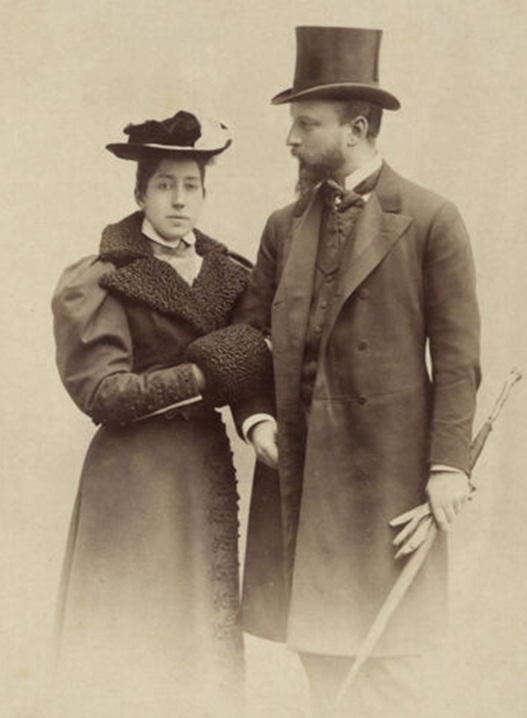
Above:Helene's older daughter Hanna (1868-1901) with Hanna's husband Count Hendrik Bylandt (1863-1932) (detail). Source: Osterreichische Nationalbibliothek (Austrian National Library).
18. Aftermath: Helene (continued)
Press censorship ensured that no newspaper in Austria-Hungary even mentioned the memorandum, but reports in the foreign press about happenings in the empire had an avid readership back home where the memorandum would have found a compassionate audience in at least some quarters.
One of Krauss's informants who harvested gossip at the Vienna Jockey Club, which Rudolf had frequented, reported that the consensus there was critical of Rudolf, who "had forgotten his position" and sympathetic to Mary.
But opinion within the nobility (that is to say, among the people who mattered most to Helene) was split. The sister-in-law of Count Hoyos, representing the faction loyal to Franz Josef, was outraged that some people were siding with Helene and Mary and wrote in her diary that it was "important to make a common front against the guilty."
"One cannot escape the impression," With her memorandum suppressed and her banishment from Court still in effect, Helene addressed a Petition of Mercy to Franz Josef. In it she told how her attempts to justify herself and her daughter to him in person had been rebuffed, and how she felt her only alternative was to publish a defence, and how her memorandum "had been confiscated as though it contained an attack against Your Majesty".
Helene now wished "to throw herself most obediently at Your Majesty's feet in order to defend herself against the accusation that any of the complaints produced in the memorandum related to the sacred person of Your Majesty" (Judtmann 172).