


Click on the picture to see a larger version.
Another of the surviving London cabmen's shelters which were very similar in pattern to the Butt Bridge shelter in Ulysses. This shelter is located nearly opposite the Albert Hall and backs onto Kensington Gardens and Hyde Park. The upper panels between the windows are decorated with a pattern of holes that includes the monogram "CSF" (Cabmen's Shelter Fund). The railing that runs around the shelter was intended for tethering horses but its practical value must have been limited. Cabs were required to line up one behind the other which meant that most of the horses were out of reach of the railing.
Source: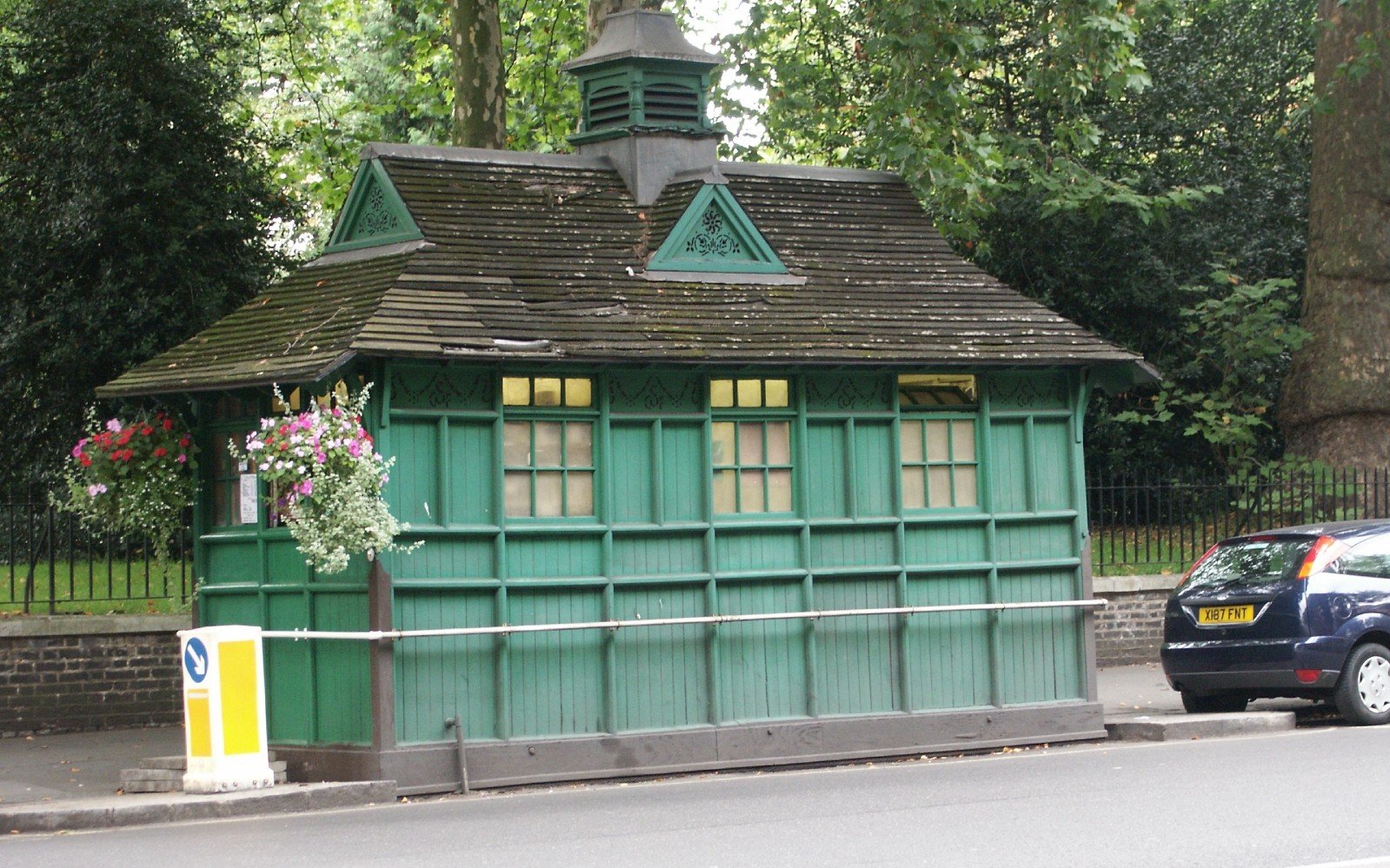
Kensington Gore Cabmen's Shelter, London SW7. Photograph by Alan Fisher.
Photo provided by Alan Fisher, editor, Call Sign Magazine.
Bloomsday for Cab Drivers / 26
The Cabmen's Shelter / 4
The shelter's fictional proprietor is rumoured to be a real person named James "Skin-the-Goat" Fitzharris.
In 1882 Lord Frederick Cavendish (Chief Secretary for Ireland) and Thomas Henry Burke (Permanent Undersecretary of the Irish Office) were stabbed to death in Phoenix Park by a militant group calling themselves the Irish Invincibles. The real "Skin-the-Goat" was one of two jarvies who drove the killers to and from murder scene. He served 14 years in prison for his part in the conspiracy.
Like those in London, the Butt Bridge shelter is run under the auspices of a charitable organization but it is a self-sustaining operation catering not just to cabbies but to anyone with the price of a meal.
Bloom takes a somewhat jaundiced view of this setup:
Bloom's ambivalence about combining charity with profit stems from Molly's experience as a piano player in an institution called the "Coffee Palace", which the philanthropist Dr. Thomas Barnardo invented as a non-alcoholic alternative to the "gin palaces" of London.
The Coffee Palaces provided cheap refreshments and free entertainment (music or lectures), but paid their performers miserably.
To be sure it was a legitimate object and beyond yea or nay did a world of good, shelters such as the present one they were in run on teetotal lines for vagrants at night. On the other hand.... The idea he was strongly inclined to believe, was to do good and net a profit, there being no competition to speak of. [16 790 / 26368]