




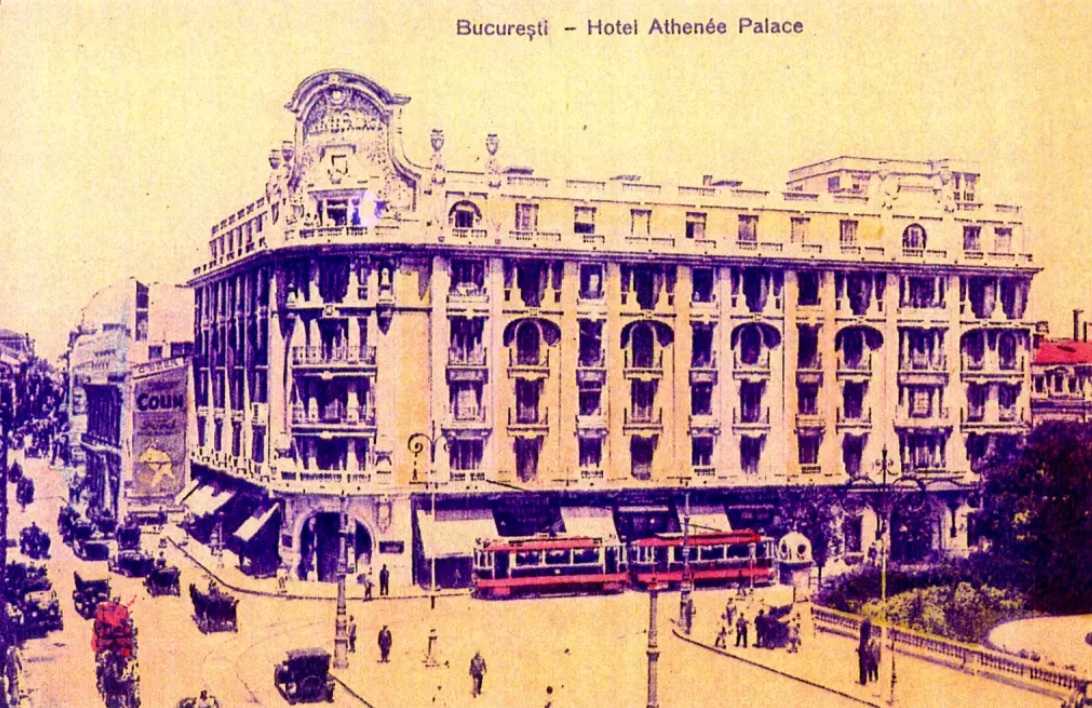
Above: The Hotel Athénée Palace, circa 1920. This is where Rachel stayed while in Bucharest. She had a two-room suite on the fourth floor.
Source: Victor Potra, "1920, Hotel Athénée," Potra's Box of Old Stuff (blog), February 26, 2013.

Above: Map A. The extent of Polish and Russian advances during the Polish-Russian war, 1919-1920.
Source: Adapted from "File:Territorial changes of Poland 1919" by Esemono: own work (Wikimedia Commons).


Above: Map B. Poland's borders after the Polish Russian war.
Source: Adapted from "File:Territorial changes of Poland 1922" by Esemono: own work (Wikimedia Commons).


Above: Map C. Poland's borders as of 2002.
Source: Adapted from "File:Territorial changes of Poland 2002" by Esemono: own work (Wikimedia Commons).

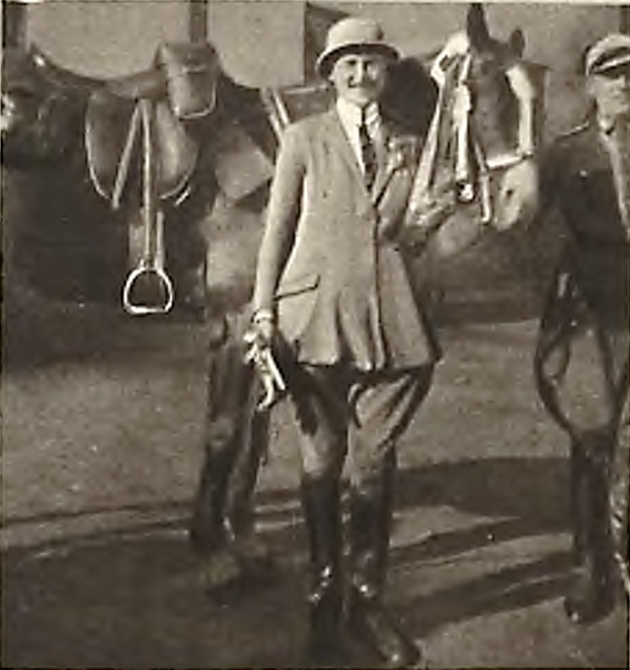
Above: "Mlle Rachel Dorange in the yard of D.O.K. Lwow."
Source: Slowo Polskie: Tygodniowy Dodatek Illustrowany (Słowo Polskie: Weekly Illustrated Supplement, August 27, 1928, p. 3 (via Jagiellonian Digital Library)

Above: The former Hotel Krakowski (or, in Ukrainian, Krakivskyi) where Rachel stayed in Lviv. No longer a hotel, the building now houses the Court of Appeal of the Lviv Region.
Source: Google Maps: Image capture June 2015. Also, "What were the first hotels in Lviv: the romantic history of the Swiss Hotel Lviv: About the History of the Krakivskyi Hotel," Swiss Hotel, Lviv.
9. Bucharest, 1928 (continued)
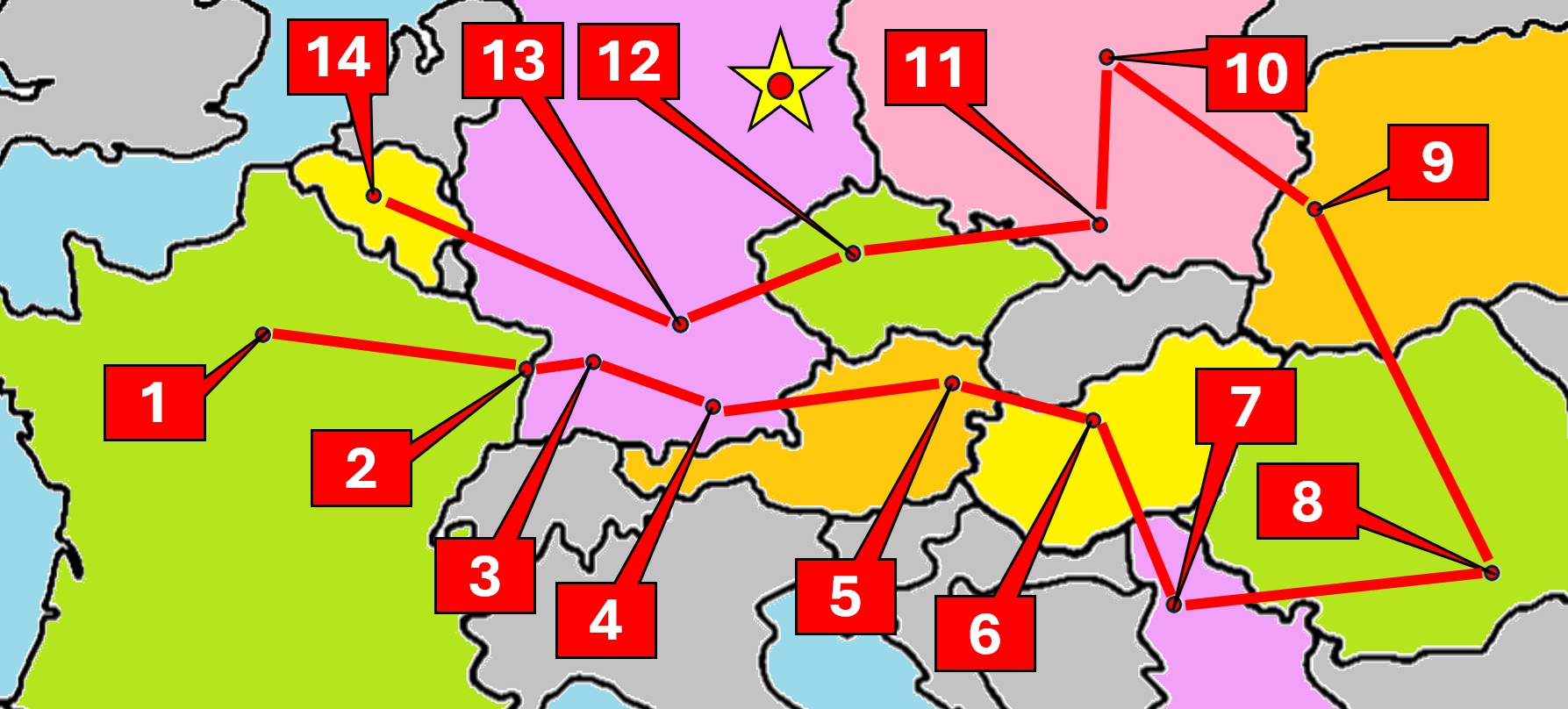
Bucharest to Lviv (Map 8-9)
On July 22, 1928, three day before she left Bucharest, Advărul published Rachel's intended route to Warsaw which she sketched out by listing some of the towns along the way:
"Miss D'Orange leaves deeply moved both by the reception she received in Romania and by the attention she received during her stay in the country."
Once again we run into a scarcity of newspaper reports about Rachel's journey from Bucharest to Warsaw, either because reporters were not present, or because newspapers were not digitized, or because errors in digitization get in the way of retrieval.
Nevertheless it is probably safe to assume that she did not meet with any greater difficulties on her way to Warsaw than she had faced on the road to Bucharest, if only because she would likely have complained about them as she did about her treatment in Bucharest itself.
The reports that have surfaced suggest that Rachel's reception on the road was generally quite warm and welcoming, as it had been pretty much all the way from Paris. There was no shortage of well-wishers who greeted her at each village and town and who even accompanied her for several kilometers.
Le Petit Journal or her hosts paid the hotel and restaurant bills and the French government, through its diplomatic contacts, helped smooth Rachel's way in the countries that her journey took her through.
However, below the surface, old and new animosities were festering. Even before she crossed the northern border of Romania she entered disputed territory claimed and/or held, at one time or another, by Poland, Romania, Germany, Austria, Russia and Ukraine.
For example Chernăuţi, the fifth town in Rachel's itinerary (after Ploiş. Buză, Focşani and Roman) was awarded to Romania when the Austro-Hungarian empire was dismantled in 1918. The town was captured by Russia during World War II and is now in Ukraine and called Chernivtsi.
At the end of World War I Poland, like Czechoslovakia and Yugoslavia, was a new nation (or at least a newly reborn nation). Although the country's history goes back at least a thousand years, for more than a century, from 1795 to 1918, Poland had ceased to exist politically, its territory divided among Russia, Germany and Austria. With the end of the war Poland was able reclaim some of its lost territory and declare its independance once again.
The situation was complicated by the fact that in 1918 the western part of the old Russian empire was still occupied by the German army. As German troops began streaming back home, Russia – now the Soviet Union – sent the Red Army to occupy the territory that the Germans evacuated. Fearing invasion, Poland attacked Russia in February, 1919.
The result was a seesaw war that lasted until October, 1920 (map A, left). In 1919 the Polish army advanced eastward to capture Minsk and Kiev; then in 1920 the Red Army pushed the Poles back almost to Warsaw; finally Poland won a decisive victory in the fall of 1920 that forced Russia to sue for an armistice. The peace treaty was finalized in 1922.
At the time of the armistice Russia was hard pressed by a civil war that had been raging since the Russian revolution of 1917 and which would last until 1922. The Soviet government not only faced counter-revolutionary White Russian armies but also hostile local militias and independance movements within Russia. As well, nine different nations, each with its own agenda, sent a total of more than 250,000 troops into various parts of Russia to assist the forces ranged against its government.
Poland was initially allied with the neighbouring Ukrainian Peoples' Republic against Russia (map A, left), although in 1918-1919 the two allies and a second Ukrainian entity called the West Ukrainian People's Republic or ZUMR, fought each other in a bloody eight-month war in the area around Lviv. Poland won this war and the ZUMR ceased to exist.
The Ukrainian Peoples' Republic had declared its independance from Russia in October, 1917. However, internal dissensions contributed to the Republic's re-absorption by Russia. In the peace treaty that ended the Polish-Russian war part of Ukraine (including Lviv) and part of what is now Belarus were formally ceded by Russia to Poland (map B, left).
Poland also fought a two-month war with Lithuania in 1920 over Lithuania's territorial claims. Poland seized the disputed territory and created a puppet state called the Republic of Central Lithuania in October of 1920. The puppet state lasted 19 months before it was absorbed by Poland.
So, when Rachel crossed the Romanian border, she entered territory that was then under occupation by the Polish army. The occupation lasted until 1939 when Germany and Russia carved up Poland between them.
There seem to be no press reports of Rachel's progress until she turns up in Lviv, and the reports differ as to whether she arrived on Friday, August 10 or Saturday, August 11:
"A few days ago, Miss Dorange crossed the Polish-Romanian border and arrived in Lviv on the 10th of this month, where she was welcomed by the French consul." (Kurjer Zachodni Iskra)
"Miss Rachela Dorange, a charming Parisian rider... spent Saturday in Lwow. At the Zielona gate, she was received at 5 o'clock by a delegation from the Equestrian Society, who accompanied her to the DOK district, where the French consul, Mr. Martin, Major Łabędzki, Counselor Bełtowski, and a delegation from the Society of Friends of France were waiting. The brave horse Le Huppé was given a beautiful stall in the DOK stables, and the chic, spirited Parisian was accommodated by the city at the Krakowski Hotel." (Slowo Polskie)
The Slowo Polskie report seems the best bet for accuracy since it appears to be a first-hand report of her arrival. The five p.m. arrival time (five a.m. seems unlikely) doesn't leave much of Saturday for her to spend in Lviv, but maybe "spent Saturday" was a mistake for "spent Saturday night."
The Zielona gate was the Sykhiv Tollgate, one of nine tollgates originally set into Lviv's old city wall. They dated back to the late 18th century when Lviv was part of the Austrian empire. The Sykhiv tollgate, which covered the southeastern approach to Lviv, was moved twice as the city expanded and in 1928 it was at the intersection of Dnisterska and Zelena (formerly Zielona) streets. No images of it have survived but it is marked on old maps.
"DOK" stood for Dowództwo Okręgu Korpusu, or Corps District Command. DOK VI (also known as DOK Lwow), headquartered in Lviv, served one of ten military districts in Poland and its occupied territory. The DOKs provided logistical and administrative support to Polish army units in each district.
Rachel expected to reach Warsaw in about three weeks so the list only covered a few of her intended stopovers. She was diplomatic about describing her stay in Bucharest: