• Driver Profiles
Manjit Singh Dhaliwal Edmonton, Alberta / November 3, 1988 Manjit Singh Dhaliwal, 31, had driven part-time for Yellow Cab in Edmonton for four years apparently as a day-shift driver.
During that time he had never run into any trouble with passengers although the partner he shared the cab with, Amrik Dhaliwal (no relation) had been beaten and robbed six times in the same four years. This presumably reflected to the differing risks and hazards between day- and night-shift driving.
Manjit Dhaliwal held a masters degree in mathematics from a university in the Punjab and was hoping to enrol in a PhD program in mathematics. However, civil unrest in that Indian state persuaded him to continue his studies in Canada.
Mr. Dhaliwal possessed "a distinct intellectual inclination and excelled in his academic pursuits," said Jasbir Singh at his funeral. He was "a true Albertan, a proud Canadian and a fine human being."
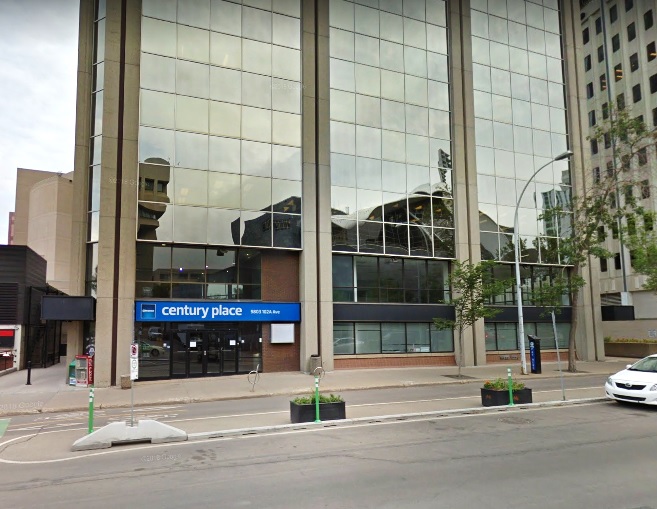
At 2:45 p.m. on Thursday, November 3, 1988, Yellow Cab received a call from a man with a strong accent. He gave his name as John and asked to be picked up at the main entrance of Century Place, a downtown office tower. Mr. Dhaliwal was given the trip and witnesses later described a well dressed East Indian couple getting into his cab.
No more was heard from Mr. Dhaliwal until the next day when a hunter found his body lying in a cutline in a heavily wooded area near Devon, about 25 km (15 miles) southwest of Edmonton. He had been killed with a shotgun blast.
Mr. Dhaliwal's cab was discovered later Friday in Emily Murphy park near the centre of Edmonton. Witnesses reported seeing the cab being driven back to Edmonton from the direction of Devon at about 5 p.m. Thursday, and of seeing the cab abandoned in Emily Murphy Park as early as 7:30 p.m. Friday.
Because Mr. Dhaliwal's body was found outside Edmonton, the RCMP took the lead in the investigation assisted by two detectives from the Edmonton Police Service.
The investigators publicly appealed for "John" to come forward and when this produced no response Yellow Cab's recording of his telephone call was released to the media. Soon after the broadcasts John contacted the police.
John and his wife did not make a connection between their trip and Mr. Dhaliwal's murder until they heard the recording. However, all they could say was that Mr. Dhaliwal picked them up at Century Place and drove them to their home in a residential neighbourhood of Edmonton. They could provide no clue as to where Mr. Dhaliwal went after dropping them off.
Police theorized that Mr. Dhaliwal's killer flagged him down shortly afterward and either persuaded or forced him to drive to Devon.
Mr. Dhaliwal was the sixth Edmonton cab driver to be killed since 1981:
Three other drivers had survived deadly attacks. In 1981 one driver was shot and another was stabbed multiple times. In 1986 a 25-year-old Yellow Cab driver suffered a 16 centimetre (10 inch) gash to his neck.
Not surprisingly, Mr. Dhaliwal's death became a focal point for anger that had been simmering for years as regulators and the taxi industry seemed unable to counter the ongoing attacks with much more than lip service.
"The taxi commission sits on their backsides and talks about what should be done but ends up doing nothing every time something like this happens," said Laat Bhinder, a friend of Mr. Dhaliwal's.
The anger intensified when it was learned that no alarm had been raised by Yellow Cab when Mr. Dhaliwal failed to show up for a 5 p.m. shift change. "They didn't take it seriously until after midnight," said Mr. Bhinder. "Nobody cared at all."
Also, when Mr. Dhaliwal's family initially called the Edmonton police to report him missing, they were told "wait a while" and call back. The police did not record a missing person report until 1:03 a.m. Friday.
A police spokesman said there was no minimum waiting time before such a report would be accepted but he conceded that if an officer advised a caller to "wait a while," a record of the call would not be entered in the police computer. Edmonton police chief Leroy Chahley later announced a review of procedures for dealing with reports of missing cab drivers.
On November 7, four days after Mr. Dhaliwal's murder, about 100 cab drivers and supporters held a protest meeting on the steps of Edmonton city hall demanding action on cab driver safety and in particular protective shields. Other cabs circled city hall to show their support.
Edmonton mayor Terry Cavanagh, who initially told the protesters to take their complaints to the taxi commission, agreed to meet with representatives of the group. "We are treated like scum," driver Eton Attzg told Mayor Cavanagh as other drivers waved placards demanding an end to the killings.
Mr. Dhaliwal's funeral was delayed until his parents and brother could make the trip from India. Their departure was held up by difficulties obtaining the necessary Canadian travel documents until the Member of Parliament for Edmonton Southeast, David Kilgour, intervened on their behalf. The family later extended their stay so that they could be with Mr. Dhaliwal's widow Gurmit through the Christmas holiday.
The funeral, attended by about 600 people, was the occasion for more criticism of Yellow Cab and the police for their handling of Mr. Dhaliwal's disappearance. Jasbir Singh, who delivered the eulogy, said the company was "unfortunately totally indifferent and devoid of any concern for the safety of one of their members."
The Taxi Cab Commission responded to the criticism on November 14 by announcing the creation of a seven-member task force to report back to the commission in 90 days with recommendations on ways to protect cab drivers.
1981 Taxi Driver Safety Subcommittee
By now the creation of task forces and special committees had become standard practice in Alberta for dealing with, or appearing to deal with, taxi driver homicides.
Back in December, 1981, after the murders of Robert Seward, Frederick Horyn and Gerdina Kruidbos, the Edmonton Taxi Cab Commission set up a subcommittee on taxi driver safety.
The 1981 subcommittee produced a report with eight recommendations for protecting drivers.
The report advised against the use of "weapons and tear gas," the subcommittee having been advised that Mace, as a form of tear gas, was a prohibited weapon in Canada and allowing its use by taxi drivers would require an amendment to the criminal code.
However the report suggested that shields "be permitted", that the industry consider "the widespread use of electronic radio warning systems," and that additional insurance coverage for drivers be made compulsory.
The subcommittee organized a pair of public hearings to solicit response to its recommendations. Unfortunately the the first hearing had to be cancelled due to lack of interest and the second, held in March, 1982, attracted only one of Edmonton's 1,100 cab drivers.
The commission and the taxi industry blamed the drivers for the failure of the meetings. "The apathy is unbelievable, but that's the way it is," said commission member Mark Wray who was also the public affairs spokesman for Co-op Taxi. "Over the years we've tried so many things for the benefit of drivers but they just kick it. If it's not a matter of dollars and cents, they can't be bothered."
The Edmonton Journal scolded the delinquent drivers in an editorial. "Where are those tough-talking cabbies, who were drying their eyes and promising revenge at Ms. [Jeri] Kruidbos's funeral? Hiding behind their meters, that's where."
Not mentioned in the editorial, nor by the meeting organizers, was the fact that in January, 1982 the taxi cab commission received two petitions from drivers. One, with 119 signatures, recommended that drivers be allowed to carry repellants, like Mace. The other, with 105 signatures, asked that bullet proof shields be installed in cabs.
Nor did the editorial assess the likelihood of the subcommittee's recommendations actually being implemented. Whether or not the Taxi Cab Commission had the authority to makes its recommendations mandatory, it had no desire to do so. Rather, the recommendations amounted to suggestions that the industry could pursue voluntarily if it saw fit. This may have been another reason for the lack of turnout at the subcommittee's meetings.
1985 Alberta Task Force
Following the murder of Charmayne Fay Manke in April, 1984 and another public outcry the Alberta Government formed its own task force on taxi driver safety. The task force held public meetings across the province and issued its report (Taxi Driver Safety in Alberta) in February, 1985.
The report's recommendations, based on input from the public hearings, dismissed shields as ineffective.
"In the matter of protecting drivers from attacks, it is often proposed that the installation of a protective barrier between passenger and driver will provide a solution.
"""The committee does not subscribe to this singular view.
"
"Invariably, attacks occur as the taxi has stopped and the assailant has used pretexts to get close to the driver.
"In a number of attacks in the USA, because screens were fitted the driver has been shot through the side window or the windscreen." The Task Force report's indictment of shields included the curious argument that "A barrier may antagonize an assailant further in the case of premeditated attacks."
The Task Force report's conclusions ignored the fact that the majority of murderous assaults on drivers are unprovoked, surprise attacks that take place inside the taxi.
The report's conclusions betrayed the special pleading that is routinely brought against shields. Shields are deemed ineffective because in some instances -- for example, being shot through the driver's window -- they cannot protect the victim. Yet other measures which are of no use in surprise attacks -- secret distress signals, flashing distress lights, conflict management training -- are touted as effective measures to protect drivers.
Instead of shields the Task Force report recommended electronic alert buttons linked to dispatchers and police, training courses for handling dangerous situations and using cash drops or lock boxes to limit funds in the cabs.
Bill Diachuk, the Alberta minister of worker's health, safety and compensation, was at pains to assure the taxi industry that compliance with the Task Force recommendations would be purely voluntary.
"For us to say to owner-operators 'you have to have this' would be accepted negatively by them," he said.
The response of the Edmonton taxi industry was that the Task Force recommendations were already in operation before the Task Force was formed and that the $35,000 exercise was a waste of taxpayer money.
"That sounds exactly like what we are doing right now," said Edmonton's chief taxi licence inspector Rudy Berghys, referring to the Task Force recommendations.
"We have the safety manual, limit the amount of change they [drivers] carry . . . . They [the Task Force] seem to have taken a page right out of our book."
Ralph Wiedman, Yellow Cab's vice-president and general manager, asked "What are they telling us that we didn't already know? The industry can solve its own problems."
Co-op Taxi's general manager Ken Atterbury said the Task Force report "didn't come up with anything new." He said Co-op already protected its drivers with two days of training and "electronic devices" in the cars.
The Task Force had also recommended that the industry consider getting drivers under the insurance umbrella of the Workers' Compensation Board that would at least offer the minimum of $10,000 compensation at an annual cost of $210.
Yellow Cab's Ralph Wiedman rejected this recommendation, saying that drivers were free to buy their own compensation insurance and that driving a cab "is much safer than a weekend in Banff, unless someone sticks you up."
1988 Edmonton Taxi Cab Commission Task Force
The 1981 subcommittee and the 1985 Alberta Task Force provided both a precedent and a template for the Edmonton Taxi Cab Commission's 1988 task force. Manjit Dhaliwal was the second driver to be murdered since the 1985 Task Force report, Jim Morris having been shot to death in September, 1985.
The driver protests that took place after Mr. Dhaliwal's death initially focused on the need for protective shields. Member of Parliament David Kilgour attended the city hall protest meeting on November 7 and asked drivers to vote on shields by a show of hands. There was nearly unanimous support.
Indirect support came from Alberta labour minister Rick Orman who offered Mayor Cavanagh provincial financial assistance for any measures that Edmonton city council might implement to protect cab drivers.
"I know this is a municipal responsibilty [but] I think it is time some action is taken," Mr. Orman said.
The chairman of the Edmonton Taxi Commission, Robinson Koilpillai, said he would introduce a resolution at the next commission meeting on November 14 asking city council to make shields mandatory. However, Mr. Koilpillai acknowledged that there was strong industry opposition to shields.
"We have discussed this at least three different meetings this year and both the drivers and managemant are very negative about shields," Mr. Koilpillai said.
Mr. Koilpillai's statement illustrates the tendency of public officials, industry spokespersons and the media to treat taxi drivers as a homogeneous group when it was clear that the city hall protesters and the drivers cited by taxi industry representatives had diametrically opposing views on shields.
This conflict arose from the peculiar nature of local taxi industries which are typically made up of three or four groups of players with differing interests and agendas.
Taxi Industries
From the outside, the various taxi companies in Edmonton were monolithic corporate entities owning fleets of taxis and employing staffs of drivers. In fact, however, the companies were called, and functioned as, "brokers." Like insurance and investment brokers they operated as middlemen between customers and service providers.
The service providers were the individual cab owners, many of whom -- perhaps the majority -- were small operators owning a single cab which they drove during the day and turned over to a hired part-time driver for the night shift.
The cab companies were owned collectively by the cab owners through formal associations which were run democratically, with all the tumult that the word implies. Policies were set by vote, with owners of multiple cabs having multiple votes.
The cab owners were, in effect, the principal customers of the cab brokers or companies, which provided them with dispatch services, radio communication, advertising, driver recruiting and other business essentials. The cab companies also served as a political voice for the owners, lobbying legislators on their behalf or directly influencing taxi policy through membership on the Taxi Cab Commission.
The third group of players in the mix were the hired drivers who worked for the owners. Some of these were full time drivers and some were part timers who worked at other jobs and dropped in and out of cab driving depending on their need for extra cash. In practically all cases their principal contact was the individual cab owner they worked for, and in many cases the contacts developed into long term relationships.
Working in isolation from one another, and with disparate backgrounds and varying levels of commitment to the taxi industry, hired drivers faced huge hurdles in organizing themselves for collective purposes. The funeral of a slain colleague offered one of the few occasions that motivated them to come together.
A fourth group of players were absentee owners who saw their cabs as an investment but did not operate them. These owners delegated the management of their cabs to someone else, often a cab company which would maintain and manage the cabs in much the same way as a property management company would manage an apartment building or other rental property. Absentee owners typically had little or no interest in safety issues or any other aspect of the taxi industry.
It is easy to see how the differing interests and agendas would result in an impasse to action. The taxi companies could say they did not own the cabs and could not be held responsible for installing safety devices. The owners did not want to be saddled with the costs. Day and night shift drivers tended to have different opinions on the hazards of the job and the need for safety measures.
Of course, in lumping "drivers" together as one homogeneous group, the media were simply echoing taxi industry representatives who repeatedly asserted that "many drivers" opposed shields without specifying which drivers they were talking about.
[Next column] Century Place, 9803 102A Ave., Edmonton. Google Street View, June, 2018.
Shields
Mr. Koilpillai's proposed resolution quickly aroused the opponenents of shields who repeated the same arguments that were set forth in the 1985 Task Force report.
The strongest arguments brought against shields showed how quickly safety concerns could be subordinated to economic concerns.
The major objection to shields was their cost, which the 1985 Task Force estimated at between $550 and $1,200. It was also argued that shields would alienate customers by making them uncomfortable. Shields isolated drivers from their passengers, hampering conversation. Shields caused ventillation problems. Passengers in shielded cabs suffered more injuries in the event of accidents, which raised the issue of liability.
But by a strange leap of logic the economic arguments against the protective shield somehow added up to an argument against its effectiveness as safety measure. "It's not going to help," declared Rita Curtiss, manager of Co-op Taxi.
Even stranger, the 1985 Task Force report, so roundly dismissed by representatives of the Edmonton taxi industry when it was published, now became the chief authority on the effectiveness of shields. Despite its reliance on opinion and anecdotal evidence it now became an "in-depth" study which "concluded that shields are not effective in protecting cabbies from customers."
Tom Klaray, executive vice-president of Yellow Cab, said that "based on the study's findings" he did not support the use of shields.
Then on December 27, 1988 Robinson Koilpillai, the chief advocate of shields on the Taxi Cab Commission, resigned as chair "so he can enjoy retirement." He expressed confidence that the issue of taxi driver safety "has been accepted for its urgency and importance" and "will be resolved quickly" by the newly-appointed task force.
"It is with that hope I am leaving the commission.... I think in the very near future we will see (cabs) here much safer for drivers than they are now."
By now the possiblity of installing shields in Edmonton taxis had become a non-starter as far as the Taxi Cab Commission was concerned and the safety task force busied itself with other options, such as hidden alarm systems and improved taxi training for drivers.
"The key ... is education and common sense," said Ald. Ron Hayter, a commission member.
Even Laat Bhinder, the friend of Mr. Dhaliwal's who had helped organize the city hall protest on November 7, became convinced of the value of secret alarms.
"It wouldn't even have to show where the cab is, just that there is trouble. Then other cab companies could be warned to look out for the cab," he said.
Two representatives from MacDougal Industries appeared before the commission to announce that the company was about to field test a new alarm system that would allow dispatchers to follow the path of the cab driver and locate the vehicle in case of emergency.
The possibility of a tracking system was of interest not only because of its supposed safety benefit but because it promised to give taxi companies better control of their fleets and drivers. One of the concerns raised at the commission meeting was "flag fares" that drivers picked up on the street without reporting them to the dispatcher.
Just how far away these proposed measures were from the reality of a surprise attack was made clear in a news report carried by the Edmonton Journal on November 14. The report described the slashing of 24-year-old Toronto cab driver, David Carlisle.
The knife attack came from behind without warning other than what Mr. Carlisle luckily recognized as the click of a switchblade.
"The blade was in my throat and I grabbed it before he could plunge it in deep. The blood was everywhere." The assailant fled leaving Mr. Carlisle with a 10 cm (6 inch) gash in his throat. The driver called for help on his radio and was rushed to hospital.
But while the Taxi Cab Commission may have dispensed with shields, some cab owners were happy to install them.
Harold Sittler, a Camrose businessman, had purchased about 100 bulletproof shields for a dollar apiece at a federal government auction and he offered them to cab owners for free. All an owner had to do was drive to Camrose to fetch a shield and show proof of idenfitication.
The shields had originally been installed in RCMP cruisers. By the middle of November, 1988, 15 cab owners had taken him up on the offer. Mr. Sittler said they "told some pretty scary stories about attacks and stabbings."
Meanwhile, by January, 1989, police were no further ahead in their investigation of Mr. Dhaliwal's murder. About a dozen cab drivers raised $5,300 to add to the $2,000 reward already offered by Edmonton Crimestoppers for information leading to the arrest of Mr. Dhaliwal's killer.
Safety Education Task Force
In August, 1989 it was revealed that yet another task force had been toiling for three years on the creation of a safety education program for taxi drivers. The eight-hour program, developed by RCG Consultants, included a 30-minute video, role-playing, workbooks and information on what drivers should do after an incident. The program had already been adopted by two U.S. cities and was being considered by others.
The program had been developed with the help of $140,000 grant from the Alberta government -- enough to install between 100 and 250 shields at the $550 to $1,200 rate cited in the 1985 Task Force report, and perhaps many more if the money had been offered to owners as a partial subsidy.
The safety program ran into initial criticism because it was to be voluntary rather than mandatory, a decision that seems to have been influenced by the taxi industry.
Philip Strong, operations manager for Yellow Cab, objected to the idea that the program be made a requirement for cab licenses, though "as responsible corporate citizens, we will make the program mandatory," he promised.
"It's unnecessary that municipalities get involved in that much regulation. If I was a betting man would say that they're not going to do it."
But six months later, in May 1990, the Taxi Cab Commission entertained a motion to make the program mandatory for drivers. At this point industry representatives objected to the graphic nature of the program's video content.
Jim Orchard, public relations manager for Skyline Cabs, said that depictions of a stabbing and other violent acts against drivers would "scare the hell out of them." Mr. Orchard said he wouldn't want to work a shift after watching the video.
After about 20 minutes of in-camera discussion, the commission voted to allow companies to substitute any "approved" safety education program for the one sponsored by the Alberta government.
Remembering Manjit Singh Dhaliwal
While the Taxi Cab Commission was inching its way toward a mandatory safety education program about 600 people gathered at the Gurdwara Singh Sabha Society temple on November 5 to observe the first anniversary of Mr. Dhaliwal's death.
The gathering was attended by Bob Findlay, vice president and general manager of Yellow Cab in Edmonton, who announced that his company was developing an electronic warning signals which would alert dispatchers that a driver was in trouble. He declined to say when the electronic signals may be installed in the cabs for fear of tipping off criminals. The system was to be named after Manjit Dhaliwal.
A year later, on November 18, 1990, another gathering attended the temple to honour the second anniversary of Mr. Dhaliwal's death. The reward gathered by friends and colleagues had now reached $6,000 and a 1000-name petition was presented to various political leaders in hopes of spurring on the investigation into the murder.
"It's not that we're unhappy with what police have done," explained Laat Bhinder. "It's just that we hope they would put on extra staff or extra effort to find the person or persons who committed this barbarous murder."
Mr. Bhinder expressed some disappointment that the electronic signal system announced by Mr. Findlay a year earlier had not yet materialized. Nothing had changed in the two years since Mr. Dhaliwal's death, he said.
Mr. Findlay explained that the Yellow Cab had to abandon the alarm system because it was poorly designed and didn't work.
Gerald Fischer
In November, 1991, three days after the third anniversary of Mr. Dhaliwal's death, a Co-op driver was beaten over the head and robbed at knife point. Edmonton city councilor Sheila McKay called on the Taxi Cab Commission to act quickly in implementing safety measures.
Noting that it had been three years since the slaying of Manjit Dhaliwal, "some safety measures should already be in place," she said.
A month later, on December 5, Gerald Fischer was found dead in his cab with multiple gunshot wounds to the head. The pressure on the Taxi Cab Commission for action intensified. This annoyed commission member and chief license inspector Berghys.
"I'm constantly bumping into the 'do something' attitude. My question is, why don't drivers?" he said. "The safety measures are out there for the industry to use. Those who own their own vehicles can do whatever they want to help their safety."
Notwithstanding Mr. Berghys, about 50 cab drivers rallied at city hall to demand improved safety measures and draw attention to the deaths of Mr. Fischer and Mr. Dhaliwal.
Most of the drivers at the rally were Sikh, with only a handful of white drivers in attendance. This illustrated one of the political realities for taxi drivers.
As members of the same cultural and religious community, Sikh drivers had the necessary connections, means and opportunities to organize for collective action. These assets explain why the Sikh drivers were able to stage repeated protest rallies and exploit other events to publicize their message. The lack of these assets among the rest of Edmonton's drivers helps to explain why the Sikh drivers were not able to garner much support from the wider taxi driver community.
In the wake of Mr. Fischer's murder the Taxi Cab Commission mobilized its safety committee and charged it with producing yet another set of recommendations for protecting cab drivers. The recommendations were to be delivered by March, 1992, but the safety committee hit a snag and the March deadline had to be set back to May.
The committee had created a questionnaire directed at more than 35 drivers who had been victims of crime during 1991. Among these were 18 cases of armed robbery, 14 cases of robbery with violence and one case of aggravated assault. Knives were used in 18 of the cases, while other weapons included handguns, a beer bottle, a screwdriver and a pen.
The purpose of questionnaire was to determine if there were warning signs before the drivers were attacked, if the crimes occurred in a certain area, and how quickly drivers were able to call for help. Unfortunately the response was disappointing and few quesionnaires were completed.
Strangely, the drivers targeted by the safety committee were not contacted in person. Instead the questionnaires were left to be picked up in taxi company offices. It seems not to have occurred to the safety committee that part-time drivers, working directly for individual cab owners, might not set foot in a company office.
Nor apparently did it occur to the committee that victims of recent violence might not want to relive the trauma by filling out a questionnaire.
However, there were drivers who could have told the safety committee all they needed to know about murderous attacks. Lakbir Mimhas, interviewed following Mr. Fischer's death, told how he was left with a punctured lung, a 24-week stay in hospital and a scar on the side of his head after being attacked by two young men he picked up from a downtown phone booth.
"Why are you trying to kill me?" he asked his assailants during the attack. "They said 'we need your money' but they never took it." Clearly robbery was only a pretext and the real motive for the attack was the urge to inflict mayhem on a vulnerable victim.
Safety committee chairman Hatem Naboulsi blamed the tepid response to the questionnaires for the delay in releasing the safety committee's recommendations. To him it was more evidence of driver apathy. "If the drivers don't come forward, we can't help them," he said.
As a footnote Mr. Naboulsi said that the safety committee in its recommendations had "virtually ruled out" the possibility of installing shields in taxis "because drivers deem it too costly and say it doesn't allow interaction with customers."
1992 Safety Committee Report
In November, 1992, Mr. Dhaliwal's friends and colleagues gathered to remember him for the fourth time. Karen Leibovici, vice chair of the Taxi Cab Commission's safety committee attended the gathering and was called on to explain why no safety measures had been implemented in the four years since Mr. Dhaliwal's murder.
"There's nothing in the industry right now that is foolproof, that we can say if you spend $1,000 or $20 that this will save your life, and I don't know if we'll ever find it," she said. She also said that shields between the driver and passenger were discounted "because they are far from foolproof."
The search for a "foolproof" solution -- rather than for a solution that would improve a driver's odds of survival in an attack -- was certainly a foolproof excuse for inaction inasmuch as no safety device or measure will be effective in all circumstances.
Nevertheless the safety committee had kept busy pondering various safety alternatives. In fact, one had even been implemented: "Decals on all cars now specify the driver can ask for payment up front an attempt to avoid confrontations over fare payment."
The fruit of the safety committee's deliberations was issued in a report on November 9, 1992.
The committee had spent a lot of its time in an unsuccessful effort to identify an affordable tracking system that could pinpoint a driver's position (GPS systems were still only on the horizon).
The committee, had however, created an "action plan" with these elements: police would monitor any incidents of violence against cab drivers and make the details available to the commission, taxi companies and drivers; training programs and driver files would be subject to random reviews by the city's taxi inspector; driver permit applicants would be tested at random for their knowledge of the city, the taxi by-law and driver safety; cab drivers would be encouraged to be clean and neat and well dressed while on the job; and the committee would try to develop a good driver award or a taxi driver appreciation day.
On November 7, 1993 there was yet another gathering of friends and colleagues to honour the fifth anniversary of Mr. Dhaliwal's death. The idea was raised of having the case aired on the U.S. television show Unsolved Mysteries, but the RCMP had approached the producers of the show two years earlier. Mr. Dhaliwal's case had been rejected because it did not have a U.S. connection.
1999 Calgary Task Force
In December, 1999 Calgary taxi driver Ghulam Murtaza was attacked with a hammer. He survived, but suffered permanent brain damage. Once again the 1985 Task Force report was cited as the last word on the effectiveness of shields, even though evidence from New York City showed a dramatic drop in attacks on drivers after shields were made mandatory there in 1994.
Inevitably a task force was formed to "find solutions" to the problem of taxi driver safety in Calgary. It was chaired by Roger Richard, president of Associated Cabs, who stated that he "had yet to see a study that backs shields as a deterrent."
Despite his personal opinions Mr. Richard assured reporters that "everything is open for discussion. On that issue [shields] everybody still has an open mind."
It was clear, however, that the emphasis of the task force would be elsewhere. "The implementation of superior training could prove to be a key factor," said Mr. Richard.
"We will be reviewing training methods from a number of cities across Canada and we will be selecting the one that best suits our needs."