




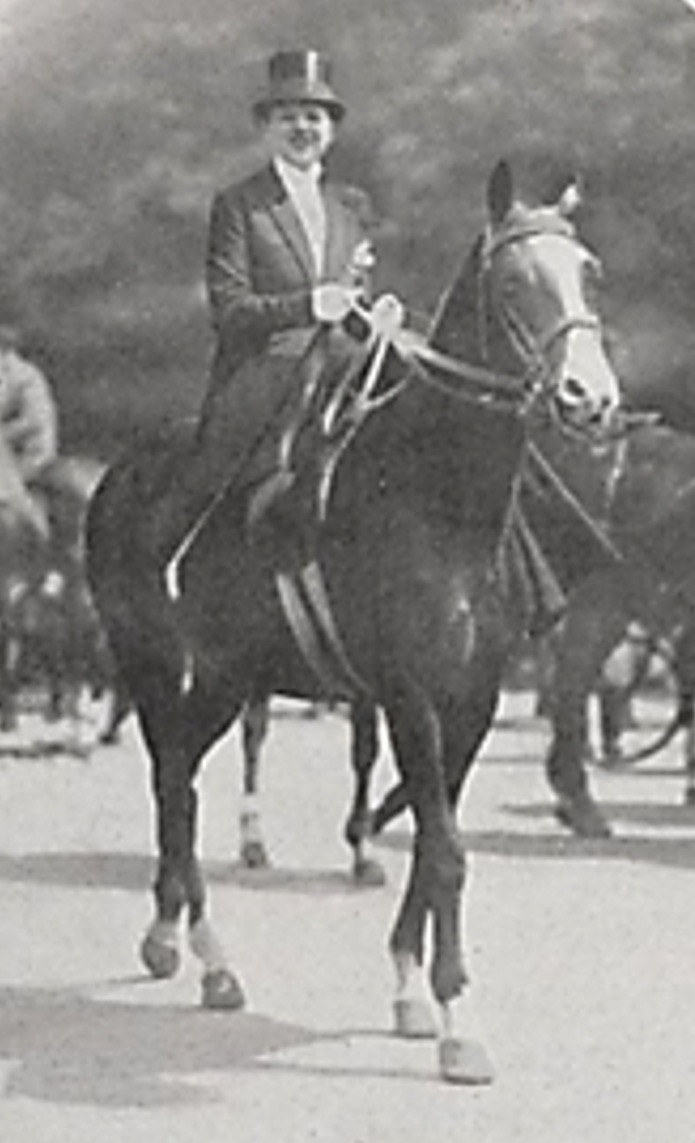
Above: Rachel at the 1925 "Most Beautiful Amazon Contest" (detail).
Source:Le Sport Universel Illustré, July 10, 1925, p. 454 (via Gallica).
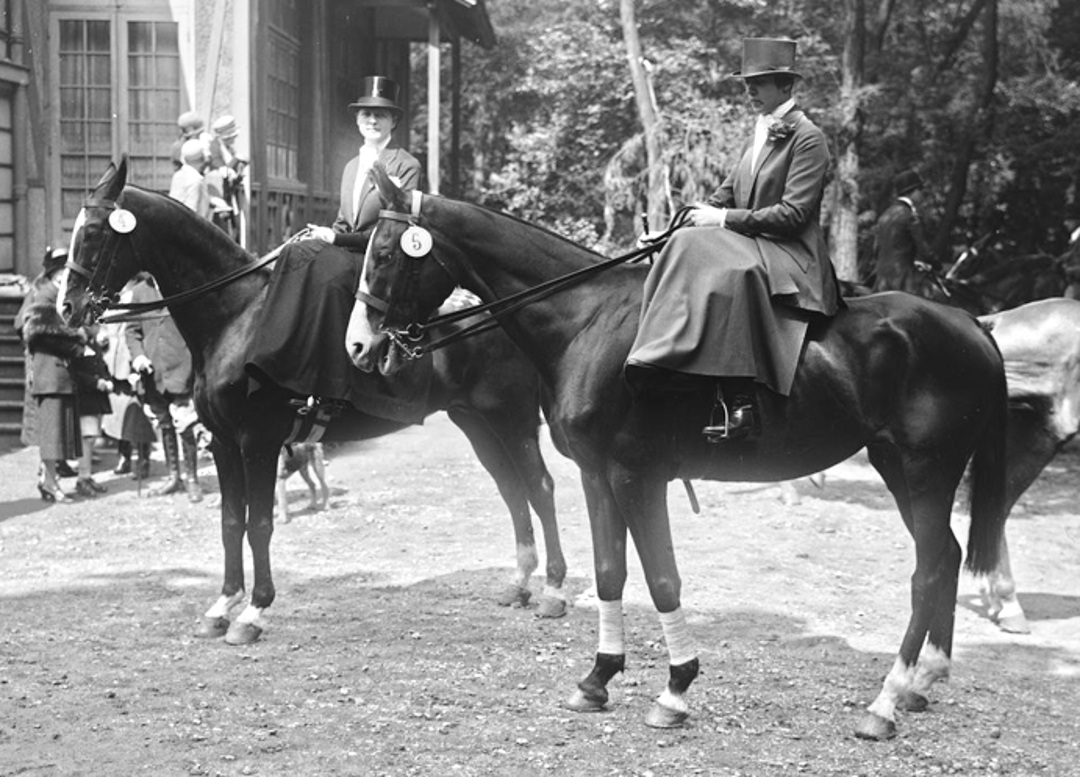
Above: Rachel (left) at the 1926 "Most Beautiful Amazon Contest" with Madame Dorys (detail).
Source: National Library of France (via Gallica. Photo credit: Agence Roi. A slightly different shot was published in Le Sport Universel Illustré, June 25, 1926, p. 421 (via Gallica) and in L'Art et la Mode, July 3, 1926, p. 915 (via Gallica).
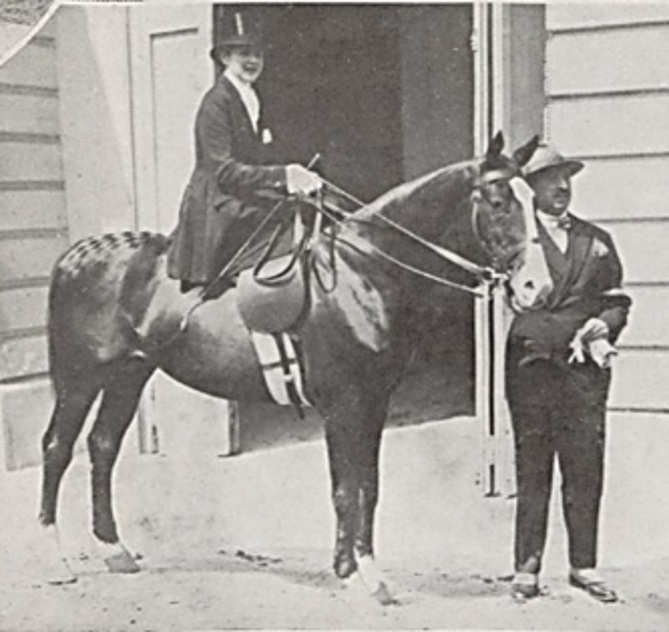
Above: Rachel (left) at the 1926 "Most Beautiful Amazon Contest" with Armand Massard.
Source: Le Sport Universel Illustré, June 25, 1926, p. 421 (via Gallica). Dr. Hervé Ménager posted the same photo on the AmaZones web site and identified the unnamed man as Armand Massard.
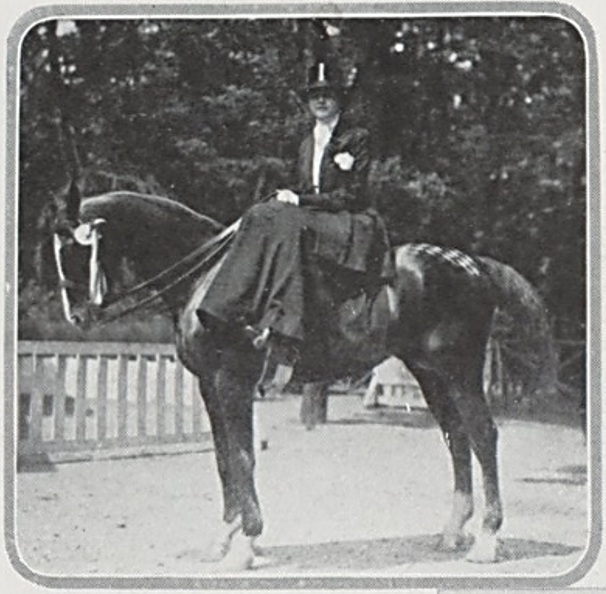
Above: Rachel (left) at the 1926 "Most Beautiful Amazon Contest." Caption: "Miss Dorange, an extremely graceful rider and accomplished athlete, was awarded second prize in the competition, consisting of a riding outfit."
Source: Vogue, August 1, 1926, p. 12 (via Gallica).
6. La Plus Belle Amazone (continued)
However, in his rush to launch the event Massard left no time to organize a registry of contestants or to vet applicants. He may have specifically invited Rachel and a few other eminent horsewomen, but everyone else had only to show up at the Pavillon Dauphine in time for 11 a.m.
And show up they did. Massard seems to have conceived the event as a kind of elegant garden party in which a handful of athletes and aristocrats would show themselves off to the jury and an audience of spectators. So he must have been surprised when he was confronted by at least 60 women on horseback.
If Massard was surprised the jury must have been flabbergasted when they understood the size of the task ahead of them. Nevertheless they soldiered on, and every single one of the 60-odd contestants was able to present herself individually to the jury and be scrutinized.
Unfortunately for the jury, the end of the parade was not the end of the contest. When the last rider had gone by the jurors looked at one another helplessly. The overwhelming number of contestants made it impossible for them to come to a decision after only one pass. So the contestants were all trooped back behind the Pavillon Dauphine and brought out again one at a time.
This time the jurors were able to winnow the field down to about fifteen from whom they chose the winner and runner up. At this point exhaustion must have set in because instead of choosing a third prize winner they awarded a share of third place to each of the next four contestants.
One of the four was Rachel. She had not done badly as far as her public image was concerned. She not only ranked among the top three (or top six) in a field of 60, but she was one of only five riders who got her picture published in the Sport Universel Illustré issue of July 10.
Even more gratifying must have been the review that appeared in La Presse on July 5, 1925. Here it is in full:
"The other day at noon, in the Bois de Boulogne, two of our colleagues had organized a contest for 'the most beautiful female rider'. And many contestants showed up, most of them riding astride, in keeping with the latest fashion trends.
"It was an elegant performance, in which I recognized only one circus rider: Mlle. Dorange, that lovely and sincere young woman who, as I have already had occasion to mention, so pleasantly follows up her morning ride through the Bois with an evening ride around the Empire’s ring at the start of the circus portion of the show.
"Miss Dorange won a well-deserved prize. In my opinion, she had shown good taste in maintaining the impeccable, classic silhouette of the long riding coat with a top hat over her visible bun.
"And so she had retained that air one sees when leafing through Baron de Vaux’s book "She thus recalled the golden age of the Cirque d'Eté and that annual Saturday evening – the eve of the Grand Prix... when all the acts were performed by women and the troupe’s greatest horsewomen competed against one another." – LEGRAND-CHAERIER." This review must have been especially gratifying considering the less than flattering review of her Empire performance that the same newspaper had published only three months earlier (page 5).
Despite the organizational bumps, what some observers must have viewed as a harebrained scheme struck a chord with the public and Massard was able to repeat it in 1926, once again in partnership with Vogue. This time things were a little better managed. No doubt to the relief of the jurors, only 28 amazons competed.
Rachel was one of the competitors and this time she did even better than in 1925. She won sole possession of second place (prize: a riding outfit) and had her picture published four times, in Le Sport Universel Illustré (twice), L'Art et la Mode, and Vogue.
The "Most Beautiful Amazon" contest became an annual event that continued until at least 1936, by which time actual equestrian competitions were added to the program. But the contest remained the centerpiece of the program and the banner under which it was held.
Rachel did not compete in the years following 1926. She had discovered a new path to fame and had moved on.